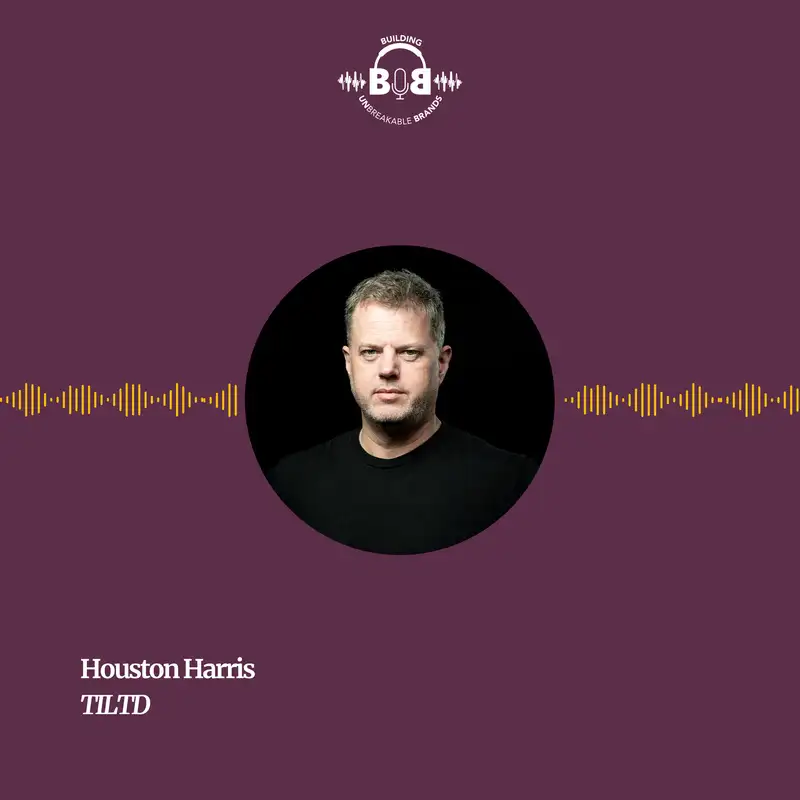
AI Is Rewriting How Trust Is Formed
Meghan Lynch (00:00):
Family businesses that are thinking about AI right now are mostly looking inward. They're asking questions like, where could AI automate something that we're already doing? Where could we save time? Where could this reduce cost or complexity inside the business? And those are great questions, but there's also a bigger shift that's happening outside the walls of the company that far fewer leaders are paying attention to. AI is changing how your customers behave. It's changing how people look for solutions and find options and how they decide what brands they trust. For generational family businesses, this matters more than it might for anyone else because one of their greatest strengths has always been knowing their customer better than anyone else. And that's not just knowing them through data, but through decades of conversations, pattern recognition and lived experience. The risk right now is that customer behavior is shifting so quickly that even great instincts can start pulling decisions backwards toward what used to be true, not what's happening now.
(01:15):
And this is the shift we're going to be talking about today.
(01:22):
Welcome to Building Unbreakable Brands, the podcast where we talk to business leaders with a generational mindset. I'm Megan Lynch. I'm an advisor to family businesses and CEO of Six Point Strategy, which helps generational brands honor their past while evolving for the future. Over the past few weeks, I've been spending time with Houston Harris, whose work focuses on how authority and trust are formed as AI increasingly shapes how people find and choose businesses, products, and services. In this episode, I want to walk you through how this change in customer behavior is actually showing up for family businesses and why Houston's insight into how trust is forming in this new era of trust formation is critical to maintaining reputation and brand strength in the next decade. For a long time, Discovery followed a familiar pattern. A customer searched. They clicked around. They compared options. They formed an opinion over time.
(02:32):
But today, something else is happening first. Before a customer ever visits your website or asks a peer for recommendation, or before they raise their hand to talk to your sales team, an AI system has probably already done a first pass. It's already interpreted what kind of company you are, what problems you solve, who you're comparable to, and even whether you're worth considering. Houston Harris describes noticing this shift.
Houston Harris (03:05):
I want to say about nine months ago, I started feeling things that I was very uncomfortable with. Now, to give you a little bit of background, we offer a lot of digital marketing types of things from paid search and organic search and et cetera. And I started watching how AI was stepping into the conversation, so to speak. Traditionally, I think we've all taken the approach of going to Google, searching for something, finding a million different places to look, doing our due diligence, trying to make a decision, build consensus, pull in our data together, and then buying the sneakers that we wanted, whichever ones we finally landed on. That's changed or it is changing. And that's part of the problem is we're in a transition phase that is that very uncomfortable.
Meghan Lynch (03:54):
This uncomfortable shift was what Houston calls a move from the digital era to the interpreter era. What's most important to understand is this. AI is not replacing human judgment, but it is influencing it. By the time a human shows up, the option set has already been significantly narrowed and we don't tend to question or reject that curation, as Houston explained.
Houston Harris (04:25):
Now we have this device, this entity, this presence called AI that's our interpreter. And for some reason, we're having a tendency to trust it right out of the gate with our decisions.
Meghan Lynch (04:39):
For customers, the curation tools like ChatGPT feel incredibly helpful. They save time and reduce overwhelm, and the combination of speed and provided rationale creates a lot of confidence. But for businesses, especially relationship-driven businesses, it introduces a new kind of risk. As Houston put it ...
Houston Harris (05:05):
We like it as a user, but we hate it on the other end.
Meghan Lynch (05:09):
So why do we hate it? This is where a lot of leaders misdiagnose what's happening. We either get worried that AI is going to replace our relationships and value, or we correct in the opposite direction and think that it means that we need to become louder and faster and more visible at all costs, which feels fundamentally uncomfortable for leaders who are used to letting their work speak for itself. But that is not what's happening. The real risk is that the humanness of your value or relationships or expertise actually becomes hard for AI to interpret. Houston put words to it in a way that immediately resonated with me.
Houston Harris (06:03):
If you want visibility, you've got to build trust, just like you would with people. So if I'm going to have a relationship with you, I have to exhibit attributes and consistency in order for you to feel a sense that you can start to trust me. You have to see the evidence. AI is exactly the same. It wants to trust you, but you have to demonstrate activities and content around that trust, how it's structured, where it's placed, et cetera, to get that trust. And if it trusts you, you'll be visible. Otherwise, you might just drop down into the static of all the other noise and not be seen.
Meghan Lynch (06:41):
So what makes AI trust? As Houston explained, it's about creating credible, substantiated solutions to human problems.
Houston Harris (06:52):
It's more of how do I position myself for my value and then ask the question myself, "What value does my company bring? What do my products do? " And then phrase that in a way that answers a problem or addresses a problem. So I can be as seen as a source of that knowledge of that answer so that when AI consumes all this content and it's formulated an answer, I'm in the answer where I'm an option to consider.
Meghan Lynch (07:23):
So for generational enterprises, the real risk is the lack of clarity and misinterpretation. It will either mean that your company is not seen to be a solution or an option and doesn't get trusted and recommended by this AI interpreter, or that it misunderstands the value that your brand is bringing. This can mean that you're showing up in a way that actually hurts customer experience and trust. Houston gives one example.
Houston Harris (07:56):
You might be positioned somewhere that's not appropriate. You might be an answer to a problem that you can't answer. The example I've got there is we have a mortgage lender that we're working with. They started out 20 years ago as a direct to consumer mortgage option. Well, they shifted into wholesale. They don't do anything direct to consumer anymore, but they get a disturbing amount of inquiries coming from search engines and AI where they're recommended as a direct to consumer mortgage option because there's press releases from 20 years ago that say they do that. Well, AI, nobody's told AI that they don't because their website doesn't say it.
Meghan Lynch (08:37):
When this happens, your sales team could spend the first half of every conversation correcting assumptions, or you could get compared to companies that don't really belong in the same sentence as you. This risk is one that generational businesses feel differently and I would argue more acutely. This is because family enterprises are often built on a lot of tacit knowledge and longstanding relationships that sometimes go back generations. And then also a lot of reputation that lives in people's heads. It's not necessarily documented anywhere. And there's often a nuance that's getting explained in conversation, but that isn't living anywhere else. For decades, that has worked because humans are very good at filling in those gaps and trusting based on intuition, nuance, and context. AI does not do that. What used to be nuance now reads as ambiguity. Houston captured this tension when we talked about multi-generational companies.
Houston Harris (09:49):
How do we take the trust that you've spent 90 years building that we don't want to lose it? And losing it would be, let's pack it in a banker's box and throw it in the basement of the building. Let's not do that. He
Meghan Lynch (10:00):
Recommends that all of the proof and history and relationships that are currently living in your head or your team or in banker's boxes in the basement all need to be documented and provided as proof in a way that AI can understand it. And there's huge value to doing that.
Houston Harris (10:20):
If I was a multi-generational company, I would be looking at where do I have things that I didn't think were assets around my reputation that are now assets and how do I get those published somewhere so AI can consume it to reinforce because AI is like this independent sales agent that's potentially out there running around having interactions with people that I don't even know about.
Meghan Lynch (10:45):
In order to unlock that AI sales rep and get it working for you, he recommends not only putting that information on your own website, but sharing it with trusted third party sources that AI bots like ChatGPT are already going to for information like media sources or LinkedIn.
Houston Harris (11:06):
We can put it on our website, but then republish it on some other sites that talk about the fact that here's the questions we asked, here's how people responded to them. There's a degree of transparency to it that is in a place off domain, on somebody else's domain that lends a little bit more trust flow and credibility that now allows AI to consume it.
Meghan Lynch (11:31):
This allows your legacy to be shared, translated, and amplified in a way that AI understands and will ultimately have a positive impact on your visibility and growth in the future. At this point, the conversation usually turns towards marketing tactics. People want to talk content or PR or platforms, but what I learned from Houston is that this is not really where the responsibility starts. This new interpreter era is also signaling a leadership opportunity because as Houston made clear, authority starts with definition.
Houston Harris (12:13):
That governance of overseeing that, at the top level, we have to decide once again, what is our position, what's our niche, all of that. Now we've got to state that expertise and then state how we know we're wanting authority. How do we govern that information? Somebody's going to have to be in charge of that and keep an eye on it.
Meghan Lynch (12:34):
If your organization can't clearly articulate what you're an expert in or where your value is, and then also what you're not an expert in and where your value is not, and then also what proof supports that expertise and value, then AI is going to fill in the gaps for you. This is where governance comes in. And this isn't governance like in the legal sense of ownership structure or board policy. This is reputation governance. It answers questions like who owns clarity? Who maintains consistency? Who ensures that what's true internally is legible externally? That's leadership work that you can't delegate. All of this can feel so overwhelming, and that's understandable. It is new. It is big. It is complex. So what is a first step? Luckily, Houston clarified that the first step is actually not leaping into action and doing a lot more. It's just seeing clearly.
Houston Harris (13:48):
You can do this yourself fairly straightforward, but you have to shift yourself into the persona of your customer. So be your customer or give it to somebody who doesn't know enough about your company, pull in a cousin, something, and have them sit down with one platform and give them some questions and see what comes out of it. And if you're showing up, great. Now, if you're showing up, are you showing up correctly? So there's increments there of refinement. If you're not showing up, okay, now push it far enough to where you then start to show up. Did you only show up when you interrogated about your brand directly, but you didn't when it was about the concept? That'll start to show you missed opportunities.
Meghan Lynch (14:33):
You have to be aware of how AI tools like ChatGPT are currently interpreting your brand and reputation. When you put yourself into the role of your customer and start asking questions and looking for solutions, what happens? Are you showing up at all? Are you showing up in the right context? Are you being recognized for what actually differentiates you? Step number one is that you have to understand that this new landscape and your current place in it. Once you do, you can understand whether your next step is actually about visibility or whether it's still about clarity. And if you need help getting this baseline perspective, there are experts like Houston who can help with a brand interpretation assessment. Okay. So now to wrap up. If you've been focused on AI primarily as an internal efficiency tool, you're not wrong, but you may be missing the more important shift.
(15:43):
Customer behavior is changing. Decision making is compressing and interpretation is happening earlier than ever before and without a human involved. The good news is that family businesses are actually well positioned for this moment because trust, proof, and endurance are already part of your DNA. The work now is to make that legible before somebody asks, and now is the time to start. As Houston put it-
Houston Harris (16:14):
You're not going to miss the train, so to speak, but you need to get on the train and get going. Buy a ticket. Let's go.
Meghan Lynch (16:23):
I love Houston's confidence and energy. Buy a ticket, let's go. Because what's really sticking with me is this idea that AI is not just changing how work gets done. It's changing how customers decide who to trust. For family businesses, that is not a small shift. Knowing your customer better than anyone else has always been a superpower. The challenge now is making sure that understanding still shows up as clearly as decisions get compressed and options get surfaced before a human. And the good thing is, this isn't about chasing new tools or trends. This is about stewardship. It's about protecting clarity and making sure that the reputation you've built over decades can still do its job in a very different environment. If this episode resonated with you, consider sharing it with someone else navigating generational leadership or long-term stewardship. If you're looking for help getting a baseline perspective, feel free to reach out to Houston.
(17:32):
We'll link to his LinkedIn profile in the show notes. And finally, if you'd like to help more family business leaders find the show, leaving a review really does make a difference. Thanks so much for listening and we'll see you next time on Building Unbreakable brands.