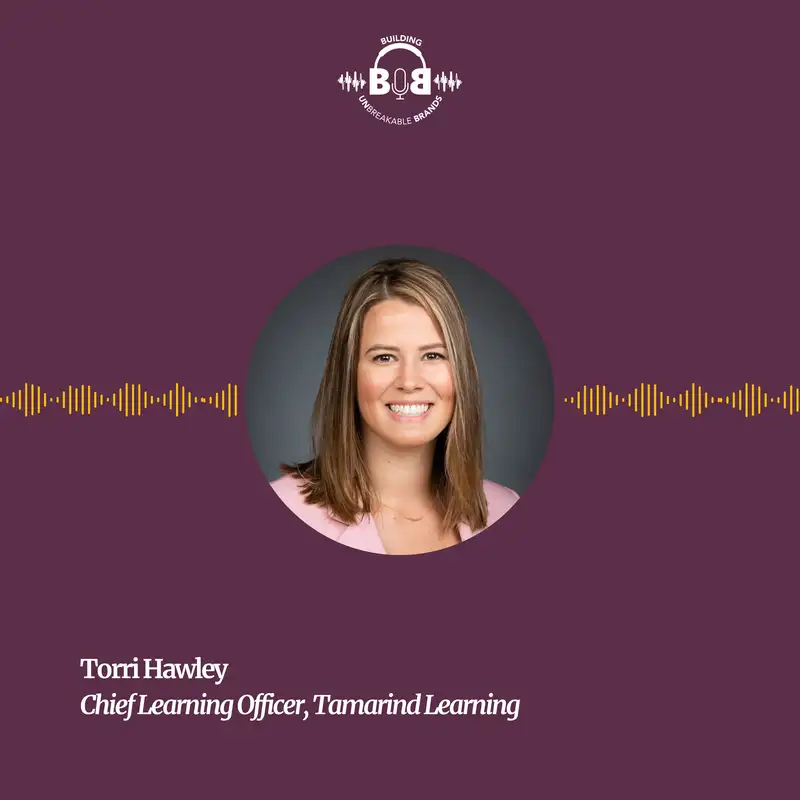
Where Do I Fit in the Family Business? with Torri Hawley
Meghan Lynch (00:00):
A lot of families say we want to prepare the next generation, but what they often mean is we should probably teach them more about money. Financial literacy is important, but it's not the magic fix a lot of families want it to be. My guest today explains from firsthand experience why you can explain the trust, the ownership structure, and the numbers, and still have rising gen family members who feel disconnected or unclear about where they fit. We also talk about what actually helps, like giving people language, context, and role clarity to help them move from being passive recipients to confident participants. All this and more coming up on this episode of Building Unbreakable Brands. Welcome to Building Unbreakable Brands, the podcaster we talk to business leaders with a generational mindset. I'm Megan Lynch. I'm an advisor to family businesses and CEO of Six Point Strategy, which helps generational brands honor their past while evolving for the future.
(01:13):
My guest today is Tori Hawley, Chief Learning Officer at Tamarind Learning and a rising gen member. Tori, I'm so glad to have you on the show today. Welcome.
Torri Hawley (01:23):
Oh, I'm so excited to be here and I'm so glad we met in the way that we did so that I can share with your audience today.
Meghan Lynch (01:31):
Yeah. I'm hoping that you can kind of kick us off by telling the audience just a little bit about you and particularly the different roles that you play and identities that you hold when it comes to family business.
Torri Hawley (01:45):
Yeah, definitely. So a tale as old as time in this space, I grew up or rather was attached to a family enterprise. So I'm a G7 member, which I feel like often people are like, "Congratulations. That's so amazing." But I had absolutely nothing to do with that. I didn't even really know. We had a pretty large family business until I was in high school. So that's sort of how I got into this world is that we did a lot of things wrong. We had our first family meeting when I was in high school because the family office was like, "This is something that we read that you are supposed to be doing and we're making decisions together." And it ended in a fistfight, the worst possible way. And so I was a senior in high school and I was like, "Oh, this is awful and we're never going to be able to do this.
(02:37):
How are we going to own this together like cousins?" And I did the only rational thing that an intellectual does is I'm going to get a degree about it. And so I went and I got my undergrad degree in family enterprise and I thought that I was going to save the family farm as it were. And then by the end of that program was like, "Oh, no way. I'm not working with my family. I don't want to do this. But what I do want to do is I want to work with other enterprising family members and those rising gen members." They called them next gens at that time. Now we're rising gens. So we've changed the vernacular a little bit, but really felt like connected to helping them become leaders in their own right. And that doesn't mean in the family system always, but in their own lives.
Meghan Lynch (03:22):
I want to just talk a little bit about identity because I think it's really interesting that being a part of a family business even as a G7 was not part of your identity growing up. And can you say a little bit more about that, like why nobody really talked about the family business or what was that like?
Torri Hawley (03:42):
Yeah, it was kind of interesting. So first I'll say, may he rest in peace, my grandfather was kind of a misogynist and he was cursed with three daughters. And so he really wanted his daughters to marry a man who would be able to come into the family business. And I will also say due to his own sort of generational history attached to the primary business, he left that business in the 80s and bought a different business that he loved way more. And so I knew a lot about that business that he loved, which was a business around sailing as opposed to manufacturing in the Midwest. And so a lot more of my identity growing up was about my grandfather's bought business than this generational business. And so my mom, because she hadn't been involved, never really talked about it. And then we moved back to Wisconsin when I was in high school, and then we were 20 minutes away from this manufacturing plant that employs a thousand plus people.
(04:39):
And it was like, "Oh yeah, by the way, this is also a thing that we own and we sort of interface with.
Meghan Lynch (04:45):
" When you look back on that early introduction, which sounded at least like it would hold the attention of a high schooler, even if it didn't necessarily leave the impact that they were hoping for, but then kind of combine that with the wisdom that you have now working with enterprising families and having studied it, what was trying to happen at that family meeting and what went wrong? Yeah, what happened?
Torri Hawley (05:13):
Yeah. So I think what we were trying to do is grapple with the decision of, should we keep this business? And despite the fact that my mom and her two sisters hadn't been involved with it, there was a deep emotional connection to not just the business, but actually to the community. And so the community where this is, is sort of like nestled into Lake Michigan and there's tons of other family, like massive household name, family businesses that are there. And my family, because they had lived there for a hundred plus years, were like sort of enculturated into the community, if not the business itself. And so I think what we were trying to do is are we the best family to own this business? And the answer that we ultimately came to was, maybe we can't do this together, but we really want to own this business because we don't want to see it get sold to private equity.
(06:12):
We don't want to see it get sold to someone else and they break it up and then we're no longer an employer and all of these things. So there was a strong commitment to like the family culture and the vision and the ownership mindset, just not so much to the operator mindset.
Meghan Lynch (06:29):
And so the meeting was kind of trying to drive that conversation and that point. Was that the purpose of having the family meeting at the time?
Torri Hawley (06:39):
I believe, ironically, because of what I do now and would say like, we can't, it's such a silly way of doing it. It was our introduction to financial literacy, frankly. So they were like, again, this is family meetings. They're a great opportunity. We rented a house on the shores of Lake Michigan and we were all getting this cousin time together. And I barely knew my cousins. I barely knew my aunts. So it was also trying to have that stated objective of, "Well, you guys are going to own this together. You should spend some time together and then we will backfill some education in there as well." So I'm a senior in high school. My one sister isn't there because she's just gone off to college and our CFO of the family office is trying to explain ownership structures and financial statements to us. And as you imagine, no one retained anything.
(07:28):
The primary thing I retain from that is that your hips are where you store cellular emotion. So there was a lot of hip gyrating occurring in that family meeting. As we were trying to release the tension, the joke just kept being like, hula hooping as we're sort of fighting through that we don't know each other.
Meghan Lynch (07:47):
That's great. Yeah. I think so often you see that kind of like, "Oh shoot, we haven't done this work all along." And so now we want to just kind of throw people into it and starting it with topics and conversations and trying to form relationship in short order versus doing overtime, right? Yeah.
Torri Hawley (08:10):
The question of who, why was the CFO of the family office the right person to facilitate a conflict family meeting and also the topic of what? Why was financial statements the thing that they wanted to teach us? But I think it comes from, and again, I see this in my work at Tamron Learning, we know the rising gen needs financial literacy to be good stewards of wealth. So why don't we just start there? I think also starting a conversation around financial statements, you're looking at the balance sheet, you're seeing how many shares are out there, who owns what, and that was also part of this conversation. It's just that no one was really equipped for ... And I will say, my family is like transparent to the point of detriment that they will give you an avalanche of information and think that's the right way of approaching it as opposed to age and stage appropriate conversations about who's learning what, when, for what purpose.
Meghan Lynch (09:05):
Yeah. I think, and as you said, so much of that comes from a good place of like, "Oh, we want you to know as much as you can, " but can sometimes have the opposite effect of either you retain nothing or it's so much information that you're not hearing it in the right order. So it ends up moving people backwards instead of forwards.
Henry Lynch (09:26):
Yeah.
Meghan Lynch (09:26):
But it sounds like the conversation that eventually emerged from all of that was a bit of a vision conversation of we start to see a role that our family can play in the community as stewards of this business and that that kind of became an important shared identity for the family. Is that right?
Torri Hawley (09:50):
Yeah, exactly right. And even when there's disagreements about how, we're really clear as a family that we care about this business and we care about this community. So the family meeting mechanism is really like, what is our approach to doing that together?
Meghan Lynch (10:06):
Why is it important to have those shared, I don't know, like north stars as a family of something to come back to to say like, "Okay, whatever else we might disagree with, we have this shared foundation."
Torri Hawley (10:23):
Yeah, we are, I will say my generation, G7, really sort of close and deeply connected, but we have different personal values. When you start looking at G5 and G6 and G7, you're looking at really, really different generational values. I mean, even how you approach communication, how you talk about money, how you ... My grandfather had strong feelings about respect and how you were supposed to engage with your grandparents and all of these things. So even though there's these deeply different personal values, having that shared family value around stewardship and ownership and continuity and this commitment to something broader helped us overcome some of those interpersonal differences. It helped us overcome conflict when I am in the boardroom with my aunt, because that's one of the roles I should have shared, is that I sit on the board of our operating company alongside my G6 aunt and my two siblings.
(11:25):
And so when we're in that room and I'm feeling conflict because I really have very different values than my G6 aunt, that I can at least keep it in context like, "Hey, we share this thing together and that keeps us moving forward." So I can forget in the boardroom these other sort of interpersonal things and stay together and moving forward towards a broader goal.
Meghan Lynch (11:49):
Speaking of different values and particularly as the family becomes larger, more complex, more diffuse, and you start having all of those potentially conflicting values and personalities at play, how do you also manage having your own reputation separate from the family, your own professional, personal brand and reputation out in the world?
Torri Hawley (12:20):
Yeah, for sure. So I ended up on the board by coming sort of full circle on this. So I had to go through a somewhat painful process of individuation. I really did not get along with my grandfather. And so when I was in college and I was working in a business associated with our family enterprise, I really had sort of this icky feeling about the fact that I was being associated with my grandfather and with the family and that piece. And so it became increasingly important for me to sort of go out on my own and think about who I wanted to be because I also think there's a really common challenge, which is if you work in the family enterprise, am I actually doing a good job? At least personally for me, that was such a huge hurdle. I never knew. I could be working and I was working 68 hours a week and I was trying so hard and I had all of these things to live up to, but I never really knew like, "Oh, are you Terry's granddaughter and that's why you're here?" And I hated that.
(13:27):
So sort of going out on my own and determining that I am enough and from an HR perspective, I'm pretty anti-external employment policies from a personal development perspective, I think it's one of the most valuable things that a rising gen member can do.
Meghan Lynch (13:43):
I feel like I hear that so often, whether it's an overt question about, "Am I enough? Am I doing a good job? Do I actually deserve this? " Or as kind of a subtext in next gen conversations of just sort of wanting that validation, is that part of the job of the family and the enterprise to help answer that question or is that a personal question, personal journey?
Torri Hawley (14:21):
I think it's a little bit of A and a little bit of B about whose job it is. And I had the benefit of not being super entrenched in this family business identity. So I was pretty easy for me to say, "Nope, I'm not going to work for the family enterprise." I wanted to fix it because I saw the problems as real, but I didn't really view it as my job. So I think there's a little bit of, in families, and particularly if you are G1, G2, where your primary human resource is to pull from family members into the business, that is your human capital pool in a lot of ways. So in that particular case, making sure that rising gen members feel like they have the opportunity to go out and build their own identity is super important. But I think there's also some personal responsibility of, for me, it was causing friction in my life and discomfort and dissatisfaction with not knowing.
(15:21):
So I think there's a degree of like I knew that I had to go out and do something else. My mom was actually here this week and we spent a fair amount of time together and she said, "Why are you the way that you are? How did you end up this way?" And I think it's because my reaction to discomfort is to try to resolve it. So not everyone is that way. So I think as a parent or a grandparent, if you were observing that sort of feeling of dissatisfaction in the rising gen member, you have a job then to say, "How can I support you in that path to individuation and validation?"
Meghan Lynch (15:57):
Yeah, I think that's great. And I'm curious, as you look back, is there anything that you tried to do that you were like, "Oh, that was just the wrong
Torri Hawley (16:11):
Move?" I'm 34, and so the older I get, the less I know. So there's a ton of things that I looked back on and I say I could have probably done that differently. I think maturity is something that only comes with time. It can maybe be forced a little bit by trauma or other things, but really, truly this sense of self and identity and developing that, I think looking to the wrong people for validation as it relates to my identity at a young age, if I could go back and say, "Grandpa's never going to approve of you. You could go to Harvard and you could teach at MAT like he did and you could do all these things." So looking to the wrong people for validation, but of course, if you're a high achieving person, as many Rising Gen members and successful families are, that is the bar that always moves away.
(17:11):
So that's what you kind of seek is approval from people who won't ever give it to you. So go to therapy sooner is maybe the advice that I would give my 20-year-old self.
Meghan Lynch (17:23):
Yes. I feel like that's excellent advice and stuff that we can all take to heart. Was your grandfather a big personality in the company and in the family?
Torri Hawley (17:36):
He was a big personality, I think, kind of full stop. And mostly he was who he was. And more importantly, I think than a big personality, because nowadays, I think you would say he was on the autism spectrum and he didn't have good personal relationships with people, but in the community, I had these views of him based on my relationship with him as a granddaughter. And then people in the community were like, "Your grandfather is the most generous, loving, kind, Christian person in this community." And I'm like, "Do we know someone different?" And that always felt a little bit weird too, and that speaks to the motivations question I think as well a little bit. If all of these people feel this way about this larger than life personality that is a central fixture in my community, and then I have this different relationship, how do people view me?
(18:34):
How do people talk about me? And so I think that actually sort of compounded this feeling of like, who the heck am I if they feel this way about this person?
Meghan Lynch (18:44):
Yeah. Yeah. I think that's really interesting. And I think can sometimes bring up also the question of like, oh, especially if that reputation, and we often talk about brand as what people say about you when you're not in the room, but if that reputation is something like, oh, I would love to have people say that about me, is that the way that I need to get that reputation? If that's the path to it, I don't necessarily want the path, but I like the reputation and the outcome. Were you able to resolve that in some way or whether in your own mind for yourself or talk something that you talked about as a family?
Torri Hawley (19:21):
Yeah, it's interesting. I think what I see still, and my grandfather passed in 2016, are still actually the echoes of his personality on our family and all of us trying to sort of live up to this. And I will say, if you know Rochelle Khanna and her work on inherited family trauma and wealth, is that he inherited that from his father, who inherited it from his father. They were both the governors of Wisconsin. And so he felt like a failure. He felt like because he ran for office and didn't get it, and then he put that on his children. And then so I think we saw that sort of echo through time, but it was really the reason why I was like, "I don't care to achieve in this way, and he is not the benchmark and my grandfather and my great-great-grandfather, these people are not the benchmark that I'm measuring myself against." And I think that was a pretty powerful moment as a young person.
(20:22):
I remember sitting on my porch almost in tears, drafting this email to my grandfather in which I was like, "You don't see me and I am the person in this family who is ready to step up into a leadership role and you don't get it. " And then as I was drafting that, I was like, "I don't want to hit send on this. I don't want that outcome for myself. I don't want to live in the Midwest and run a manufacturing business. I have so many things that are more important to me, which sort of cascaded this experience where I was like, is my purpose to do work with other people who feel this way?"
Meghan Lynch (21:01):
Yeah, I feel like I just have so many conversations with next gens, rising gens who have that exact conflict that you're talking about, which is that I believe in the impact that this company is having and that our family is having, but I don't want the role or to achieve that impact in the same way that it's been before. I have these other ideas or these other skills, and I don't see a place for that in the past. And there's also an uncertainty of how to have that conversation with the leading generation because there's not really like a sense of there's another way to do this. There's another path that's equally as valid. Were you able to eventually have those over conversations, if not with your grandfather, with others in the family?
Torri Hawley (22:02):
Yeah, definitely. And I will say, if my grandfather was one way, my mom is the opposite and she's like, "Whatever makes you happy, dear, that's what I want you to pursue." And something that we see very commonly with Rising Gen members is the number one thing they want is role clarity, and I wasn't getting that from anyone. And so unfortunately, no, I never got go north and that will be success. And I think when I look at my siblings who engage with the family enterprise, they still haven't gotten that, right? So my mom is the ... She leads the family office. My sister is sort of her succession plan. I had a conversation with my sister two weeks ago and she's like, "I just don't know what's happening." I'm like, "There's only five of you in the office. I think you could sit down in a boardroom and hash this out.
(22:50):
" But the feelings and the emotions and you never want to usher someone out the door before they're ready, and particularly when they're really tied up in the identity of the operating company, or in our case, the family office and the community and philanthropy and all these things saying like, "Geez, mom, why don't you retire? I'm sick of having to report to you. " Of course, that's not a fun conversation to have.
Meghan Lynch (23:14):
Yeah. But also, why do we equate asking what's the plan? Do you have a timeline? Why do we jump to that means I'm trying to- Get out of here. I'm curious why those two things get lumped together, because I totally hear you. Again, I think that is what happens, but why do you think that is?
Torri Hawley (23:40):
I have two thoughts on this. The first is, I think why it is, is because so often there is this really, really, really long tail to succession, right? My mom didn't get involved until she was 58, so now she's 70 and she's not ready to step back. And so even if she's probably ready from an age perspective to retire, she hasn't been able to make her impact on this yet as well. So I actually think back to Paul Edelman's research on parallel readiness or his papers on this, that when transition is assumed to be a one-time handoff as opposed to the leading generation is getting ready, the rising generation is getting ready, and they're practicing over time to build skills. And so often I think in a non-family enterprise succession, it's clearer because it's non-emotional and it doesn't feel like you're shooing me out the door, but retirement, no matter what you do, is an emotional experience.
(24:40):
So then you add in that this is my father's business that I wasn't able to engage with until he passed away. So I think it's just everything about family business and family money is it's complicated and I think no one really prepares people. And especially when you had the silent generation sort of engaging in setting the pathway here that the things, and I'll come back again to the work that Rochelle Khana does on the inherited family trauma, we are repeating things unless we have the opportunity to change those scripts.
Meghan Lynch (25:12):
So now in your work at Tamron, can you just talk a little bit more about that, like how you have been able to take this firsthand experience with your own family and then really create this whole other world of impact that you're having with other enterprising families?
Torri Hawley (25:32):
Yeah. So first I'll start by saying one of the other important things for me was to make that decision to not work in the family enterprise, go work somewhere else, and then it went horribly. I had really high opinions of myself. I have high achievement drive and I wasn't given as much power within a massive bank as I felt that I deserved as a 21-year-old. I got this really great advice from my college professor because I said, "I want to start working one-on-one and do this coaching work." And he's like, "Slow down. My best advice for you is to get older." And unfortunately that is true because I had to build up my own credibility. So I get fired from my first job in sort of like a disastrous, embarrassing way that I would not trade that experience for the world because I needed that reality check.
(26:20):
And then I worked in someone else's family business for close to a decade. And I did a bunch of different things and I observed the family system and I observed their challenges and I got a ton of sort of experience in that. And what that really did was sort of help me realize that, okay, it's not just my family, this is a lot of different families and no one really has a pathway to do it. So as it happens, I graduated from my master's program and then Kirby Ross Plock, the founder of Tamron Learning, reached out to me that week and said, "Hey, would you follow my company at LinkedIn?" And I said, "Not only that, I would love to come and work for you. " And you could not have asked for better timing or all the things sort of happening in the right way.
(27:12):
And so I really have been able to, over the past four years or so at Tamron Learning, think and reflect on my own experience with what I needed to know and also be able to see in other families that like, "Hey, there's some really important missing gaps that young people need to build confidence outside of their family business, outside of their family office, but also how do we help the people who are other? How do we help the family members who aren't involved in the business, who aren't involved in governance, but they still are interfacing with this system." And so that's a lot of the work that I do at Tamron is sort of like helping people individuate through education and being able to feel confident in spaces where having to raise my hand at that first meeting as a 17-year-old and be like, "What's a financial statement?
(28:04):
What its job? What's all this? " And grandpa's like, "You fool? I went to MIT. Why don't you know this? " So safety and learning has become really important to me at Tamron Learning as well.
Meghan Lynch (28:17):
When you're working with rising gens or other folks who are connected with the family system and the family business, are there any topics or repeated patterns that you see either like questions that people are asking or topics that they want to learn about?
Torri Hawley (28:37):
Yeah, definitely. So the first thing that families come to me and they want to learn about, again, is they want to start where we started and where so many families start is financial literacy. And what I always ask is, why do you want them to understand financial literacy? Okay, so they can make good decisions. Great. That is a very different conversation that understanding a balance sheet is not the place to start with. And so what we usually do, and I actually think this is kind of a fun icebreaker because this is like a professional hazard. What does financial literacy mean to you? Because often it's like a 40-minute conversation with the founding member of a family office or a family enterprise, and they have a lot of feelings about it. So one area obviously that families talk about is financial literacy, but also we talk a lot about the specific role of being a beneficial owner and what that means as well.
(29:34):
So even, I will tell you, this is embarrassing for me, but I say it all the time, so it must not be that embarrassing. I started at Tamron Learning and then I'm going through the coursework, like updating graphics and I'm like, "Huh, beneficiary, I guess there's a word for what I've been and huh, oh, I'm supposed to engage and talk to my trustee. Huh. Oh, I'm supposed to know what my trust is invested in. " And so all of these sort of like light bulb Of moments that I now try to help families understand, here's the impact of this. And the real fear that families have is that their kids are going to be entitled or that they are going to not have enough information and they're going to lose the opportunity to do whatever it is that the mission of the family is. So those are sort of the common things.
(30:23):
What they ask for is not always where I sort of try and push them.
Meghan Lynch (30:27):
Right. Why was that moment of learning like, oh, beneficiary, beneficial owner, like this is a role and a thing. Why was that moment important for you? What did it mean to you when you found that out?
Torri Hawley (30:44):
So I think what it really gave me is vocabulary to navigate an unclear role. Suddenly I had a label for what I was that I could then do research around and I could sort of articulate, here's the beneficiary experience commonly, and here's the challenges that beneficial owners run into. And I think that's particularly like when you get to a G7 family, most of those family members are beneficial owners at best. And quite often they're just sort of attached to this broader sort of system and organization and maybe they have no sort of understanding of their connection to it. So what it really did was give me a label that I could then move forward with and then understand who the stakeholders were. So I had sort of this like push forward of understanding and then this mushroom of understanding as well as what that means, what my rights, responsibilities and duties are, how I engage with these people.
(31:44):
And it gave me the ability to think long term as well. What does this mean for me five, 10, 20, 30 years down the road?
Meghan Lynch (31:51):
Does it also kind of go back to that question of, am I doing a good job? You were saying about how everybody wants role clarity as a piece of it. And it sounds like it's one of the things that that gave you like, oh, this is a label and a role and it has a job and I can tell whether I'm doing this job well or I'm not doing it well and I need to learn something.
Torri Hawley (32:18):
Yeah, that's interesting. I wouldn't have said that, but probably because of my personality. I want to make sense of my world and then I want to be able to kind of like do the right things. And one of the things that we see as friction in the families that we work with is, again, the parents don't want to tell their kids how much is on the balance sheet, but they start there because that's what they think sort of like the starting point is, right? Which is this whole question about the big reveal. So how do I talk to my kids about wealth? Well, you need to instead start with beneficiary characteristics. And I think a lot of times families don't have a framework for even beginning to talk about these things with their rising gen members. They don't know themselves because they don't have a structured pathway.
(33:07):
No one told them, "Here, here's the first thing to talk about is the four Ms for a beneficiary or here's the standard characteristics you might hope a beneficial owner has. What is it in our family that's different?" And so that was really helpful for me as well to be reflective. And also because I'm very close with my sisters to be reflective with them of what was your experience. And then I took it a layer deeper and then I talked to my mom and I learned about her experience and it's like, geez, no one's communicating about this. And then I think about my nephews and I'm like, great, we have an opportunity now to do this differently when they are 10 years old as opposed to in your mid 30s, 40s, et cetera.
Meghan Lynch (33:48):
And I do think that one of the challenges is that with every generation, that generation is the first one to do it at this layer of complexity. So even though G1, G2 did a thing way back when, they've never run a six, seven generation family enterprise. And so nobody teaches you how to do it unless you're specifically asking the right questions or learning from other families or working with the right advisors, but it's also so easy. You can see why people, again, from a really good place of wanting to instill great decision making and protect their family and do the right thing, jump immediately to whatever they think is like the logical solution versus getting that full picture that you're talking about and then starting at the beginning.
Torri Hawley (34:49):
Yeah. Well, and they also often are repeating the processes that they went through, right? That's where they started with dad or uncle or whoever else. So they're like, "Okay, well, that's the way that I'll do it. " As opposed to what we know is that as families continue on, that sort of shared value system and discussion and communication, that's what helps you stay together over time is having clarity as a family, not understanding financial literacy or not understanding ... Even as someone who talks about the importance of understanding what your trust does functionally, that is not going to save you. What is going to save you is that you are not furious with the grantor of your trust for being paternalistic, understanding. And that's really what education does. And I think especially going back to your earlier question, what was this light bulb moment? Why was it impactful to be able to label myself?
(35:47):
It's because it gave me autonomy and understanding so that I could then relate to all of these things with clarity as opposed to frustration. And so I mean, education for me is always going to be the launching point for deeper conversation and meaning.
Meghan Lynch (36:05):
Yeah. And I mean, I love that agency piece of it because it does, as opposed to like, "Oh, I'm a cog in the system and I have no control over anything and I'm just trying to learn what other people will make out of my future," that all of a sudden having a role and having responsibilities and things like that does give you agency in all of it, which it is empowering. And I think it goes back to that identity piece of starting to feel like, "Oh, right, I'm an individual with agency and this isn't happening to me, I'm a part of it.
Torri Hawley (36:43):
" Yeah. And I think again, going back to transparency and how families talk about this, it's really important as well because quite often a grantor sets up a trust so that it can accomplish some job for the next generation. And that maybe it just be tax and estate planning, but usually I want my children and my grandchildren to be able to pursue whatever makes them happy and they don't really communicate that super well. And then a trustee is intervening in the middle of that and having to parse and make decisions. And so something that I really feel like is important to me as a beneficiary and what my own identity as it relates to all of this is once I understood that I had a job to be prepared, engaged, informed, to ask good questions, I was then able to interact with the trustee significantly better.
(37:35):
And so that reduced that friction and that frustration that I felt within this system as well. So I think that's another thing that's really, really helpful is taking ownership of the role. And then the outcome of it is like the trustee also sees me as a prepared, engaged, reasonable person, and that makes his job a lot easier so that when I come and I ask for something or I need assistance with something, it's not like, "Oh, well, I remember I met Tori when she was 15 years old and she was snotty and this is the way that it is. " So I think yes, to your point, there's a degree of when you show up, this is a two-way relationship.
Meghan Lynch (38:14):
So I can just imagine listeners to this going, "Oh, yeah, we're not doing what you're talking about. We're jumping to financial literacy or we're making some of these mistakes." I'm curious, do you have some advice, a starting point, something that you would advise families who are looking for this more full learning and education for their rising gens, where to start?
Torri Hawley (38:45):
Yeah, absolutely. So I work for Tamron Learning, so I'll definitely recommend Tamron Learning, but we serve adults and this is a conversation that should not probably start at 18. It should probably start if you listen to someone like Jeff Savlave, he advocates for bringing kids into the boardroom as early two, three, four years old. And so I think the thing that I recommend, first of all, is being thoughtful and being intentional and using opportunities along the way, even things like going to the grocery store to educate and talk to your children about values and meaning and like, "Here's why we pay extra for the organic produce and here's why we're allowed to do it. " So I think looking at your day-to-day sort of mechanisms with your family as ways to connect and communicate and talk about these topics that will impact them over their lifetime.
(39:40):
And then if you have younger folks, I really love as a starting point for families who are like, "We don't even know what to educate when the 10 by 10 learning roadmap is really helpful for what do we teach our 10-year-olds versus our 15-year-olds versus our 20-year-olds versus our 100-year-olds." And so really fantastic resource for sort of making a plan and then find a resource like Tamron that helps take the lift off of you for creating that content. Instead, there's plenty of resources out there that can help you sort of give structure. And also like some families, they only want to learn in a conference setting. So finding the right resources for the family members as well. That's one of the biggest sort of challenges that I see is you have different family members who have different learning styles, who have different identities, and maybe they're working so they don't have time.
(40:33):
So being able to be thoughtful on that and say, "Okay, well, this is really great for this family member and understanding and being curious as well about what resources are best for
Meghan Lynch (40:47):
Hoop." You're listening to Building Unbreakable Brands, the podcast all about brand stewardship and crafting an enduring legacy. I'm speaking with Tori Hawley, rising gen member and chief learning officer at Tamarind Learning. And now my son, Henry, is here to be the voice of the next generation with some questions for Tori.
Henry Lynch (41:06):
Hi, Tori. Great to meet you.
Torri Hawley (41:09):
Oh my gosh. I'm so excited to be hanging out with you.
Henry Lynch (41:13):
So I have a couple of questions for you.
Torri Hawley (41:15):
Let's do it.
Henry Lynch (41:17):
So if you could give one piece of advice to someone my age about building a good reputation early, what would it be?
Torri Hawley (41:26):
Yeah. So I'm going to recommend the Platinum Rule. You maybe are familiar with the golden rule, but the Platinum Rule is to treat others how they want to be treated. So don't be thinking about, "Oh, I want to be treated this way and I'm trying to get this out of that instead being really reflective on how I can help this person and how I can show up for them."
Henry Lynch (41:49):
Yeah. So have you ever made a mistake that ended up actually helping you in the future? I
Torri Hawley (41:55):
Have made so many mistakes that have ended up helping me in the future. And I think if I had any advice for you, again, because I'm in my mid 30s, to really lean into failure, but one that I actually shared in the podcast was I got fired from my first real big girl job and that was absolutely essential to me was to get fired. And I think it's being able to always be grateful where you're at and to sort of move forward after something like that happens and take the value from it.
Henry Lynch (42:27):
So why is teaching and learning so important to you?
Torri Hawley (42:32):
Yeah. So it's really important to me because of my own personal experience and being engaged in a way that didn't really reach me and probably sowed more sort of like conflict and frustration, but also I think it's so important to be able to see people as whole human beings and to educate and provide for them as opposed to just shoehorning them into something. So that's why I'm so passionate about the work that I do and it can be really transformative and empowering for people to get information in their hands.
Henry Lynch (43:09):
Yeah. So I'm going to end off my little cameo with a joke.
Torri Hawley (43:16):
I'm ready.
Henry Lynch (43:18):
All right. Why did the student love reading a book about anti-gravity?
Torri Hawley (43:24):
I don't know. What is
Henry Lynch (43:26):
It? It was impossible to put down.
Torri Hawley (43:29):
A classic. I think we would call that a dad joke.
Henry Lynch (43:33):
Yeah.
Torri Hawley (43:34):
Maybe a little bit.
Henry Lynch (43:35):
Yeah.
Torri Hawley (43:36):
Perfect.
Henry Lynch (43:37):
Well,
Torri Hawley (43:37):
Perfect. Thanks for having me on.
Meghan Lynch (43:40):
Thanks, Henry. So Tori, it has been so great talking with you. Thank you so much for sharing both your experience and your wisdom when it comes to both crafting an identity and then also educating this rising generation. And sounds like the leading generation is learning a lot too in the process. So if people want to learn more about you or your work at Tamron Learning, what's the best way for them to do that?
Torri Hawley (44:08):
Yeah, definitely. So go to tamarinlearning.com if you're in Canada, tamronlearning.ca. And I'd say go to the resources tab. We have really great podcasts. We have instructional webinars. And most importantly, I think if you're interested in educating the rising gen or the leading gen, we have a knowledge assessment there. So take that and see sort of what your score is. So that'd be one place. And then if you want to follow me personally, I am pretty active on LinkedIn, so you can follow me there as well. And I post all kinds of things, my thoughts, my feelings, silly stories, all that good kind of stuff. So excited to connect with your audience. And if I can answer anything as well, you can reach me at tori@tamronlearning.com.
Meghan Lynch (44:55):
Great. Thank you so much, Tori. We'll link to all of that in the show notes. And again, really appreciate you being on the show.
Torri Hawley (45:01):
Yeah, thanks so much for having me.
Meghan Lynch (45:05):
What really stayed with me from this conversation is Tori's story about realizing, "Oh, there's a word for what I've been. I'm a beneficial owner." That moment might sound small, but you can tell it was huge for her and a real turning point. As she put it, finally having that label gave her the vocabulary to navigate an unclear role. And I think it captures something families miss all the time. The goal is not just to explain the numbers better, it's to help the next generation understand who they are, what their role is, and what their options are, and how they can participate in the family enterprise with more clarity and confidence. If this interview gave you something to think about or act on, please consider sharing it with another generational leader and don't forget to leave us a review. It's the best way to help other people find the podcast.
(46:01):
Thanks so much for listening, and we'll see you next time on Building Unbreakable brands.