108 Years In: What It Takes to Lead in the Third Generation with Jaclyn Leibl-Cote
Meghan Lynch (00:00):
By the time a family business reaches the third generation, leadership gets more complicated in every direction. In today's episode, I talk with one successful third generation CEO about the challenges of making clear decisions inside a much more complex business. We dive deep into what it takes to lead a family company forward when both the company and the family around it have grown. What needs to change in leadership as well as the things that you never want to change regardless of scale and how to tell the difference. Plus, Henry joins us with his questions about what other people don't understand about being in the CEO seat and his travel wishlist, all this and more coming up on this episode of Building Unbreakable Brands.
(01:00):
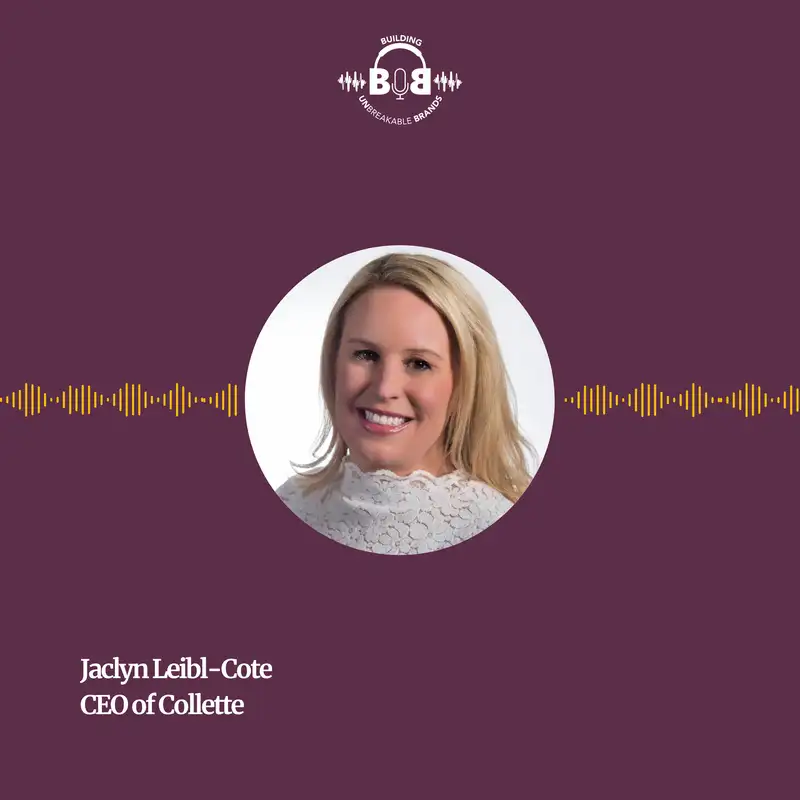
Welcome to Building Unbreakable Brands, the podcast where we talk to business leaders with a generational mindset. I'm Megan Lynch. I'm an advisor to family businesses and CEO of Six Point Strategy, which helps generational brands honor their past while evolving for the future. My guest today is Jacqueline Libel Cote, CEO of Collette, a third generation family travel business that offers guided tours across all seven continents. Jacqueline has a passion for travel and is excited to be leading this company that is 108 years old, but that she says is feeling younger than ever before. Jacqueline, it's such an honor to have you on the show today.
Jaclyn Leibl-Cote (01:43):
I'm really excited to be here. Thank you for inviting me.
Meghan Lynch (01:46):
So I wanted to just talk a little bit about your third generation at Colette, and you grew up with Collette really in the background of everyday life growing up. When you are looking back on childhood, early professional career, do you think that that early exposure shaped your identity at all as a generational leader?
Jaclyn Leibl-Cote (02:12):
I like to think so, yes. You don't realize it when you're a child. And I've seen it, I think, even through my children's eyes as I've been in the business and they see what we're doing as they were growing up. They're still teenagers, so they're still growing up. But yeah, I think do I really understand what it meant, what my dad was going to work to do every single day and what my mom was supporting at home? Not really. I didn't know what work, if you will, was really about. It's travel. So even my kids today, they're like, "Oh, you're going on your work trip again." But it is work. It's a lot of networking and it's a lot of talking and collaborating with different partners. But yeah, I would say for sure helped shape directionally what I wanted to do in life without realizing it at the time.
Meghan Lynch (03:06):
Does your family have any intentional practices around sharing stories or values or anything that you experienced growing up that helped kind of shape who you are as a leader?
Jaclyn Leibl-Cote (03:18):
Not in a formal way, no. There's always stories. I mean, my dad will tell stories, his brothers and sisters, because they've all been in the business at one time or another, all except I think only one of my aunts, because my dad's the oldest of seven. I think only one of them never was actually in the business, but they tell stories. So you hear a lot about the history. And when my dad started, he was the third employee. And so for sure, the values are embedded, I think, in all of those stories that you hear or that I've heard, but there's no formalized, let's say, values that we try to share across the family. I think they just come from the storytelling and just living and actually breathing it. The give back, be kind, lead with integrity. I mean, that kind of all just comes through all of the history and it just continues into the future.
Meghan Lynch (04:09):
Are there any favorite family stories relating to the business or just family stories in general?
Jaclyn Leibl-Cote (04:17):
I would say family stories in general. Yeah. I would say family stories in general. I mean, for sure. There's definitely funny ones from back in the day when people would tour guide. My grandfather would come in and a tour guide, this was when we were still doing motor coach tours or multi-day trips, but not really going international. And if you might wake up one of my uncles or my dad and be like, "Get up five in the morning. We don't have a guide. You got to leave in 30 minutes, you're guiding a tour to Penn Dutch or wherever." So you have those stories, but that's the entrepreneurial side of things. That's really roll up your sleeves and learn. And I guided, we were international, but we still had motor coach. So I guided actually in college in the summers and things like that. So I understand their stories because I lived it for sure a little bit, not in the same way because it was definitely more established from when they were early years.
(05:11):
But yeah, no, there's just a lot of good stories. I
Meghan Lynch (05:15):
Feel like travel always lends itself to amazing stories overall.
Jaclyn Leibl-Cote (05:20):
And experiences, yes.
Meghan Lynch (05:21):
Yeah, exactly. You worked outside the business before coming back to lead it. And you've said that when you did come back, you really felt like you kind of had to prove yourself as a leader within the business. I'm curious what made you intentionally choose to come back to the family business and how did that kind of form how you see yourself as a leader within it?
Jaclyn Leibl-Cote (05:47):
Yeah. I shouldn't say always. Probably somewhere in high school was when I knew I had that feeling that I wanted to come into the business. But yeah, our board of advisors had a rule that once we graduate college, we have to work outside the business for at least three years, which was a great rule. I mean, I worked in a publicly traded technology company, so it was a completely different industry, completely different vibes and feel from a culture standpoint, but it was a bigger business too. It was a multi-billion dollar business. So I enjoyed that, especially coming out of college. And I think it gave me a lot of experiences and ways of thinking when I did come into the business. Now, to your point, for sure, coming in as a family member, I mean, part of, I think the reason we have to work outside is that they really don't want it to ... We don't have nepotism.
(06:36):
We don't have ... So from a employee standpoint, hopefully showcasing that you have to be qualified to come into the business for any family member. But it wasn't easy because even though people work for family business, they don't always want to see the family members succeed. Or you might be younger and you're insecure at the time, right? I'm just trying to learn the business, but you can just see that there are some battles or folks sort of working against you. And so it's a hard thing to go through, especially in your 20s. But I think over time, through executive coaching, just through learning the business, it changed, it evolved. And it's good for your skin too. I think it's good to create that thick skin to sort of know that you can get past that and prove yourself, lead and showcase that you can drive change.
(07:32):
And that's what's important. And at the end of the day, that's why we all show up for work. No matter where you work, what you're doing, it's hopefully to do something really powerful and really great.
Meghan Lynch (07:41):
Was there any moment where you felt kind of like a jump in identity of like, "Okay, I've got this, " or where you felt particularly supported by your dad at some critical moment that kind of helped you step into that identity?
Jaclyn Leibl-Cote (07:57):
Yeah. I mean, I've always felt supported by my dad. So that was never a question. It was around 2014. So I came into the business in 2005. I would say around 2014, that was the year that really I changed. I think so I had gone through executive coaching. My boys were born in 2010, so they were three or four. My daughter was one or two, and I went to get my MBA at the same time because someone had given me the advice, "You either go now and get your MBA or you're going in 18 years once your kids are out of the house." So it was a lot to go through, but the coaching I received was very brutally honest, hurtful at times. It was a different experience. And I do share this one often with people. I didn't choose my raters, which isn't how you do coaching.
(08:52):
That's not how it works. One of the executives at the time chose ... So to this day, I don't know who it was that rated me, but it was some very brutally honest feedback that, look, perception's reality. So there was some for sure truth within it. And then I think going through my MBA at the same time, I had a really strong cohort of leaders that I was learning from while going through this experience on my own, through the coaching. And believe me, there were moments of why am I doing this? Should I look for something else?
(09:28):
What am I doing? But then there was something and to pinpoint that very moment, I don't know when it was, but there was a moment within that year where the confidence came and yeah, I sort of rose above it all and started leading differently. So it was probably multiple touchpoints across that year between school and coaching and a lot of self-awareness, which is really exhausting, to be honest with you, to really pay attention to everything you're about to say or observe a room for every single moment. It is really tiring to do it, but it was worth it. But yeah, it was somewhere within that year, I would say, my biggest change.
Meghan Lynch (10:07):
Yeah. I feel like that those moments where you really get that feedback, that gut punch feedback where you're like, "Oh." And then trying to keep that openness to say, "Okay, what in here could be true and how do I take this and move forward constructively?" It's such a difficult moment, I think, for any leader, but when you can find that truth and start to, as you said, rise above it, it is hugely transformational. It's one of those very difficult learning moments, but really powerful. Yeah.
(10:49):
Yeah. One of the other moments that I know was, I guess it was more than a moment, it probably felt much, much longer to you, was the pandemic, thinking about those moments that just kind of test us as leaders about what are we made for. And a mentor of mine at one point said, "Your values aren't your values if you're not willing to lose anything for them." And it feels like the pandemic was one of those moments where that was kind of what was asked of you as a leader of, obviously, tours are being canceled, nobody's traveling, and what does a leader do in that moment? And you refunded over $185 million, I believe, in tours. What was it like to put your values into action like that?
Jaclyn Leibl-Cote (11:44):
So to be honest, we didn't even think twice about it as an executive team. We did this in nine eleven. So we refunded at the time, it was 30 million during nine eleven. We were a smaller organization at the time. We did it when Israel happened, the attacks in Israel. I mean, so again, not to that scale of the pandemic, it's part of our DNA. It goes back to what we were talking about earlier. It's just part of our culture. It's part of our story. It's who we are. People couldn't travel. We didn't have travel for 14 months. I mean, it was borders closed, really challenging time and really difficult decisions internally that we had to make, but it was the right thing to do. Why are you going to hold someone's money and they may not be able to travel when travel can come back.
(12:35):
Our travelers also, age can be a challenge. And so it was just the right thing to do. We didn't question it at all. What we then had to look at was how do we make sure we don't go below this threshold from a equity standpoint to know that we were sound and that we'd be able to come back when the time was there. But yeah, definitely not a year or two that I wish to ever relive again in my lifetime.
Meghan Lynch (13:01):
Yeah. I can only imagine how difficult it was, and especially when you have teams and people who you care really deeply about. It's definitely more than just dollars and cents. It's all those relationships.
Jaclyn Leibl-Cote (13:15):
Yeah. I mean, we were over 700 employees coming into that year and we were down to 64 by July just to keep the lights on crew of people in finance doing the refunds because that was just happening for months, months and months and months. But yeah, really difficult. But the part of it too is that we have a great culture and we do have strong values and we had great employees that stuck around to help us rebuild when we came out. And I would say we're better and we're stronger and probably manage things a little bit differently too, but there were definitely silver linings out of the pandemic as well. I was put in a position to lead different parts of the organization that would've been really hard for me to come into at the size and scale that they were. I was able to be part of the rebuild and the restructure.
(14:05):
So my would've likely taken me years to try to change had that not happened was just part of what was the rebuild. And so there were definitely some silver linings within all of it, but still don't want to live it again. Yeah.
Meghan Lynch (14:21):
Yeah. That's a really interesting way to look at it. And I'm curious, as you think about a couple of those things that you feel like have strengthened coming out of it, is there anything specific that you would point to that you're like, "Oh, I'm really glad that we made this change or that when we rebuilt, we rebuilt in this way."
Jaclyn Leibl-Cote (14:39):
Yeah, I think between our marketing organization, how we rebuilt that, I think it's stronger. The talent that we've been able to take in, I think is great and it's ever evolving. There's never a finish line. Once you hit one finish line, it's a new start line as to what's new and what's next. Same thing with technology. I've really gotten into the weeds within the technology organization. I know way more than I ever really thought I would in the technology space, but I like to learn, because I may not be able to solve the problem, but I can strategize around it because I know the business enough. So to me, that's getting close to those areas were really important. And then I've always had sort of customer experience at the epicenter of all things Colette at the end of the day. We sell tours all across the world.
(15:30):
It's an experience. We're a service-based business. We've got to do really well at what we create and what people are buying. So I think it's really important.
Meghan Lynch (15:39):
I feel like particularly now a lot of the conversations that I have are very focused on this feeling that customer behavior is changing so quickly, global markets are changing so quickly, technology is changing so quickly. It just feels like the pace of change is both exhausting and also makes it difficult, I think particularly for generational family businesses to have the same confidence that we not only know our, maybe still feel confident that we know our customers now, but not necessarily that we know the customers of the future. What do customers want from us? What will they want from us? And how do we start cultivating that next generation of customer loyalty that has really been ... I think a lot of generational family businesses are so relationship and experience oriented. It's one of their superpowers. And so how do you keep that strong in such a fast change world?
(16:44):
And I'm curious if there's anything you guys have put into place that allows you to do that either from the marketing standpoint or the customer experience standpoint or technology?
Jaclyn Leibl-Cote (16:53):
All three, to be honest with you. And they're also interconnected, you need to be, to make sure that everything aligns because everything really revolves around the data. And so you really, even in today's world with AI, it all comes down data governance. If you don't have the right data, even with all these LLMs, you're not going to get the right information, you're not going to get the right answer or the right results or the more accurate results that you might be looking for. And so they're all tied together because marketing's going to use data to drive the decisions and the spend, but we've got to make sure that the technology can support it and that the data and customer experience part, that all sits together for me. So that's why when I say CX, data is integrated in there. It's so important, but they all have to be interconnected.
(17:41):
But yeah, it's not easy. I mean, that is the number one. I would say the governance around information and the data is critical to the future for any organization. And a lot of companies, especially if they've been around a long time like us, 108 years, like you mentioned earlier, yes, there's going to be ... And we live in some legacy systems. And so
(18:05):
You got to have the right talent to make sure that they're pulling apart those Christmas lights that are all tangled together to make sense of it. But it's possible. You just have to stay on top of things. You can still keep things moving forward. There might be some ... Before you can get to being supported by technology or automation, you might need some people to help support bandaiding solutions until you can get to where you need to. But then those people understand the business. And there's always, if you're a growing organization, you can reallocate the people into other areas for growth opportunities. But yeah, you have to. I mean, it's a non-negotiable. And honestly, I've been thinking about it even since before the pandemic because we're always constantly saying, are we set up for the traveler in 10 years, in five
Henry Lynch (18:53):
Years?
Jaclyn Leibl-Cote (18:54):
I mean, my mom is on Facebook and my grandmother who passed away, not this past December, but before, she was on Facebook. She was 92 years old, but she went on Facebook because she liked to see all the great-grandkids and she would write the funniest comments, but generations are changing. And so you have to be ready for it. I think it's a non-negotiable to stay relevant.
Meghan Lynch (19:18):
I'm curious as a leader, particularly when you're dealing with so much information and trying to be thinking about that customer five years in the future, 10 years in the future, how do you know what questions to ask as a leader? Is there anything that you use yourself to help you figure out what you're asking for from your team or how you're guiding them on what to pay attention to versus what to let go? It feels like almost figuring out what not to pay attention to is almost as important as figuring out what to pay attention to.
Jaclyn Leibl-Cote (19:54):
Yeah. When I think of our partners, like the travel advisors or the travelers, I think listening is just key. I think what, because they're hearing or seeing or experiencing things in the field. And I think that's ... So almost saying less is better because you're going to gain feedback as to how things might be changing in market. And then, okay, are we prepared? Then you take it internally. Are we set up to help execute a more digital savvy experience or whatever it may be that you're hearing? And so it's asking a lot of questions and trying to understand, especially internally. To me, then once it comes in in- house, it's, "Okay, what are we doing? Where are we? They're spending the budget this year from a marketing..." Think of marketing. "Okay, well, are we moving more digital? What are we moving towards? Where are we spending money?
(20:51):
What new tech solutions do we think we need? Why? "It's asking a lot of questions to understand what value they think it's going to bring into the organization. And then I try to be the person to help bridge it across multiple departments. Okay, if you're going to get that and it has these sort of solutions, is that something that would also benefit everyone from a budget standpoint? So it's trying to connect the dots as well, I would say internally for decisions that we might be making. And it's not always around technology, but there's a lot of interdependencies in our business. And so, okay, when we make this policy change or we make this change in general, what's downstream impact because we shouldn't have a oopsie moment in three months because we made this change because someone in the air department or the call center, we didn't communicate it in the right way when we make these decisions, where does it funnel down to across the organization?
(21:45):
So it's trying to think of those things ahead of time. It's not always easy, but sometimes for sure you have to be reactive sometimes and that's part of it and that keeps you sharp. But hopefully trying to be proactive is also ... It's a better approach sometimes.
Meghan Lynch (22:00):
Yeah. It seems like that is in and of itself a skillset that likely your dad or your grandfather did not have to bring as much to the organization, that it's really this function of complexity of really needing to watch for those downstream impacts and to really have that as a laser focus. Do you feel like that's a new headset or skillset that you've had to bring to the company?
Jaclyn Leibl-Cote (22:34):
I would say yes. So with my dad and my grandfather, it was definitely more of a startup mentality where people, you were part of one function, whether it be transportation or tour management, but you might've had to flex over and be more generalized. And there's still some of that that exists today, but I think that I walked into a much more established organization and I started to really come from the data and elevating the data versus subjectivity to a lot of the conversations. There's always some subjectivity just knowing and the intuition because you've been in the industry for a long time, but the data is, that's the gold at the end of the day and that gives you the nuggets you need to know to stay relevant and move into the future. So yes, I would say I've probably elevated that more as I've come in and started to lead in the organization.
(23:32):
Not that it didn't happen, but sometimes it was more of the, "Oh, I didn't realize we made this change." And it was that downstream impact it hadn't been thought of initially, and then you figure it out and you work through it, but try to lessen those.
Meghan Lynch (23:48):
Yeah, because I imagine the ripple effects and the risk is much higher now when you're dealing with a more complex system, you're dealing with many more players that what you used to be able to fix, maybe your grandfather could fix with one phone call now is months worth of work or millions of dollars of investment or things like that. Exactly. Yeah. As you think about honoring your family's values and legacy and what your family built, but still to have your own identity and vision within the business, are there anything that you've done in particular to try to balance those two potentially competing forces?
Jaclyn Leibl-Cote (24:39):
I think I tried ... So my grandfather and my father always, they walked the floor, they knew the employees, and I do that. So there's
Henry Lynch (24:48):
Certain
Jaclyn Leibl-Cote (24:49):
Things that you just make sure because employees, we're a service-based business. I mean, they're everything. Just the knowledge that they carry, the ideas that they bring. So I think there's definitely standards. It's not even a standard. It's just done. It's part of the DNA. But I think as I grew into more of a leadership role throughout the years, there were things that I would elevate to make priorities or to focus on, to drive business opportunities and growth, like our small group explorations. We've had that since 2008. It was less than 20 actor itineraries. And at one year, I think it was 2016, I was like, "Well, if we're going to have small groups, should we make it standalone? How do we elevate this to make this something or just get rid of it? " And then we got a lot of people focused around it and now we have 60 itineraries.
(25:47):
It's been a huge growth opportunity for us. And I think that helped showcase or showcase and probably differentiate me from my father or my grandfather that I could bring that forward. Now, I was in the company when we launched it, but it wasn't my idea when we launched it, but then we never focused on it. We had it to have it, to say we had it, but it wasn't really anything. It was part of something. So I think that showcased that I had a vision and that we could drive change. So what was 7% of our business in 2019 is now over 25% of our business. And it's because we got everyone really laser focused on it. And yeah, so I think that was a time that ... Because there was one thing in family businesses as I'm sure you ... Well, all family businesses are very different, so let me say that.
(26:43):
But I never wanted to disrespect or dethrone anything that my grandfather or my dad had done because it got us to where we were. But then next generation comes in and you just see things a little bit differently. It was the same thing with my dad and my grandfather. He saw the opportunity to go international and he went with it. And so I think that's where my dad has given me the grace to support me and allowed for me to drive some of that direction even before I was in the role that I am today.
Meghan Lynch (27:17):
Yeah. I think it's such a common just desire to want to be respectful, to want to honor what came before you. And I think particularly for leaders with that kind of stewardship mindset, it's like you feel grateful for the opportunity that you're given and what was built, and especially when you come into a strong company with growth opportunity, but at the same time, you want to add value that you want to feel like, okay, my perspective or my focus is adding something. I'm not just riding on the coattails of what they did before. I'm building on it. And it sounds like for you, a lot of that really is down to focus. Where are we spending our time and energy and what are the unique opportunities that my vision and what I can see in the same way that your dad saw specific opportunities and focused on them and it grew.
(28:14):
You can kind of take that same leadership skill, but apply it in your own unique way. And just because you're an individual, you're going to choose different things to focus on than maybe they would've seen or the markets change or the customers change, so the opportunities
(28:27):
Change. But I think it's such a great way to look at it because I think it kind of gives ... I'm just thinking of the listeners to kind of like what they could be picking up from this is this feeling of your focus determines the opportunities and both for your team and for the company, the business, the family. So being thoughtful and intentional about what you want to focus on as a leader and also what you want to ask your team to focus on.
Jaclyn Leibl-Cote (28:57):
Yeah, no, it's hugely important. And yeah, you have to explain the why and you have to showcase the vision and hopefully get the adoption and the belief that it's possible and move it along. And then it's really a collaborative effort. Everyone has to execute their portion of whatever it is that they bring to the table. And I'm a person and a true believer. And I don't just say this like I do believe it. I believe in surrounding yourself with people who have better and different strengths than you, because to me, that makes more of a collective, more well-thought-through decision versus thinking you have to be the person who has the right answer all the time because that's just not a reality.
Meghan Lynch (29:44):
Absolutely.
Jaclyn Leibl-Cote (29:45):
For some it might feel like it, but I haven't experienced a success with a mindset like that. So I don't know.
Meghan Lynch (29:52):
Yeah. I read somewhere that your kids used to play Colette at home during the pandemic. Is Is that true story? That is
Jaclyn Leibl-Cote (30:02):
Accurate. Yep.
Meghan Lynch (30:04):
I just love picturing that because I feel like it's such a ... I can picture what that might look like. And I'm curious what you hope they might be absorbing. I know you had said earlier that in your family it's really more about just absorbing it. It's not necessarily a very structured passing down didactic, this is what you need to know about the business. But what are you hoping that they absorb either about their identity as part of the family business or just work and family in general?
Jaclyn Leibl-Cote (30:39):
That it takes hard work and that you have to be committed to it and you're not guaranteed success. And those are things I try to reinforce to them, whether it's within sports in general, just in life, because you got to work for what you want in life. And you can't be selfish about it. But yes, they did used to play Colette. My daughter wants my job, so she was me. One of my boys, because I have fraternal twins, was my husband because he's also in the business. And then another one played Jeff, who is our chief revenue officer now, because they've known everyone. Yeah, the team knows my kids. And so yeah, it was really cute. And the thing is, I used to go to the office with my dad on Saturdays, and this is back in typewriter days, so for sure I'm dating myself here, but we would just sit at random people's desks and we would use a typewriter and we would make businesses and we would use the photocopy machines.
(31:34):
And so that was their version of that because now everything's obviously, you can work from home. We still have the office and we go in 60% of the time, so three days a week. But yeah, it was funny and cute to see them doing that. But yeah, my daughter, they can do whatever they want in life and I support them wholeheartedly, but she has said she wants my job. And so what I hope she's getting, but all of them is that it's commitment, it's hard work and yeah, it's not easy.
Meghan Lynch (32:07):
Yeah. Yeah. I also love ... I mean, you're the first woman CEO of the company. And so I also think it's cool that your daughter is the one who has her sights on the top job. Do you feel like that is something that you're modeling for her in particular?
Jaclyn Leibl-Cote (32:28):
I hope so. I hope that she sees ... I'm a working mom, obviously I'm a mom, so she sees me running from sporting events to sporting events or at this age because my kids don't drive just yet. We're an Uber or a taxi service kind of, but she sees me on all my kids. They see me on calls. We have an office in Australia and usually Monday, Tuesday, Wednesday nights. I might be on video calls until nine o'clock at night. Obviously I'm having dinner, I'm breaking away and then coming back. But it's time, it's dedication. But what I just hope that they absorb and what she absorbs is that one, it's possible.
(33:09):
And you don't have to ... My daughter actually is a straight A student. I was not a straight A student growing up, but I had a lot of common sense and a lot of street smart. So I think it's bringing different things. And as I grew up, I just became curious. So I think you don't have to be that straight A student that equals CEO and future. But you got to bring enough to the table to showcase that you can elevate yourself to lead. So any of my leaders that I'm not favoring one that I might be closer to over someone else,
(33:42):
I'm always making sure that I'm coming with a sound approach. And so yeah, I just always tell them, "I just want you to do the best that you possibly can do. And if I know that you could do better than this grade, I'm going to challenge you on it. " Even if it's a 75 and I know you could have gotten somewhere in the B's, going to do that. But I've got three very different kids. One has ADHD, so you got to always meet them where they are. And my son who has ADHD, I can't wait to see what he does in life because he's the most persistent kid and he's brilliant. He's like, he doesn't talk and he'd probably be a sports commentator. But yeah, he just knows everything about sports, stats, everything. But yeah, you just have to meet them where they're at.
Meghan Lynch (34:27):
Yeah. I mean, it's fun to see those different strengths come into play, that there's academic strengths and athletic strengths, but some of those values that I think of more curiosity, the things that you can kind of nurture and grow or resilience, those are things that serve you well anywhere and just amplify whatever strengths you have. So it sounds like it'll be fun to see what they all end up doing.
Jaclyn Leibl-Cote (34:57):
Definitely. I'm curious myself.
Meghan Lynch (34:59):
Yeah. Is there anything that you're particularly trying to avoid passing on or that you're worried about? Particularly, I feel like, again, going from second to third generation is a big jump in a family business, but third to fourth is another jump of doing something that your family's never done before. Is there anything that you're kind of thinking about a little bit differently as you look into that potential future?
Jaclyn Leibl-Cote (35:29):
To be honest, I haven't thought about it too much yet, but it is something I should be starting to think about because I have ... So I'm the second oldest of 17 cousins on that side of the family.
(35:43):
And so now that next generation four is, one of them's actually graduating high school this year, and she's the oldest of that next gen. And so yeah, there's a possibility she's going to go to college, work three years, and possibly want to come into the company. And it's a question I do get asked often, because it's so different, because even from when I came in in 2005, we're structured differently. So what used to be four, one role, but is now four different departments or four different teams, because as we grew, we had to evolve the org structure to make it attainable for people to actually do less open roles, things like that. So no, I really actually need to think about what that would look like for the next generation because coming in today and who we are would be so much different from when I came in a lot.
(36:34):
So it really is a great question. You've got me thinking.
Meghan Lynch (36:39):
Good. Yeah. I mean, I think that in the family business advisor world, we haven't talked about the cousin consortium, right? Families grow exponentially. And so again, scaling a business, it's like the complexity that you're dealing with when it's a single parent to a child that's more straightforward than
Jaclyn Leibl-Cote (36:59):
When you're dealing
Meghan Lynch (36:59):
With all of these cousins, different age groups. Sometimes you end up with one generation, but with generational gaps in age, so it's not just not quite as straightforward. So yeah, the complexity just changes and thinking about being intentional about stewarding that, I think, becomes that next that families make when they're moving from that, again, kind of second to third, to third to fourth because it's tough. It's tough work to keep a family business going that long over a hundred years is amazing.
Jaclyn Leibl-Cote (37:42):
Yeah. And my grandfather, he purchased it in the '60s, but yeah, I took the John Davis course at Harvard. My father, myself, my brother and sister at the time, so this was, I don't even remember what year, maybe 14, maybe 13. But one of the things that he said, I just remember so clearly to this day, he started with the 100% with 100 and then he goes to 50 and then he goes to a quarter. So I think the biggest thing is you can't have any generation feel that they're entitled to come in. You have to showcase at every level that you can bring value to where the business is at the time. And my grandfather purchased it. He was the 100%. My dad and his siblings become the 50% because they're 50% of my grandfather. We're the quarter percent in my generation. So as you start, and then the percentages will get less and less.
(38:36):
And so I think it shows by each generation, you really have to elevate your knowledge and skill and capability to come into what the business is. So it's a very true point.
Meghan Lynch (38:51):
Yeah.
Jaclyn Leibl-Cote (38:51):
Hey, buddy.
Meghan Lynch (38:52):
Yeah. Speaking of the next generation, we have my son Henry here who ... Henry, I believe you have some questions for Jacqueline.
Henry Lynch (39:02):
Yes, I do.
Jaclyn Leibl-Cote (39:04):
Should I be nervous about this?
Henry Lynch (39:06):
Maybe. Hey, Jacqueline. Great to meet you. Thanks for being on the podcast.
Jaclyn Leibl-Cote (39:14):
Thanks for having me. Really nice to meet you.
Henry Lynch (39:16):
I have some questions for you.
Jaclyn Leibl-Cote (39:19):
Okay.
Henry Lynch (39:20):
So what's your favorite place to travel and why?
Jaclyn Leibl-Cote (39:24):
My favorite place to ... All right. So you ask someone in the travel space, this is a really difficult question. My favorite place is New Zealand, specifically the South Island, but there are also very ... So Africa, Kenya, Tanzania, and Peru have also been two very special places that I've traveled to. So they rank high, high, high for me, but New Zealand would be the ...
Henry Lynch (39:52):
Yeah. I feel like place I would want to go to would be probably Europe. It's nice there. Kind of cloudy though.
Jaclyn Leibl-Cote (40:01):
Oh, it's so nice in Europe. No, you'd love it.
Henry Lynch (40:04):
Yeah. Well, and if you go towards the United Kingdom, it's a lot cloudier.
Jaclyn Leibl-Cote (40:12):
Yeah, that's true. But they do have the ... What's Hogwarts? What is that?
Henry Lynch (40:18):
Oh, the Harry Potter Studios.
Jaclyn Leibl-Cote (40:22):
Yeah. It was really cool. I did that with my kids after the pandemic.
Henry Lynch (40:26):
Yeah. I remember going to Universal, all the Harry Potter stuff. It's really cool. So what's the most difficult thing about your job that people might not think about?
Jaclyn Leibl-Cote (40:38):
The most difficult part of my job that people might not think about. I would say you're a good questioner person here. Dump me. It can be alone at the top sometimes, or you could at least sometimes ... I don't always feel that way, but I think sometimes you're not going to always make the right decision. It's okay to fail, but learn and move forward quickly, I would say would probably be ... Everyone's always worried about making the wrong decision, but until you make the decision and figure it out, you're not going to learn. So it's probably one of the things that's not easy because I think people come to you as a CEO and think that you're going to make the right decision and it's going to just always go beautifully, and that's definitely not the case and being humble.
Henry Lynch (41:32):
So why is your family business ... What makes it important to you?
Jaclyn Leibl-Cote (41:38):
What makes it important to me is so we sell travel packages and people, these are very expensive trips and sometimes trips of a lifetime for many people. And so I think it's that we ... What I love about being in the travel industry is you change people's lives in an intangible way. It's tangible for them when they're in the destination, but because of what we do, people meet people of different cultures. They try different foods. They learn about different religions, traditions, ways of growing up. And to me, that's pretty magical to have all these travelers go and have these experiences every day. Yeah.
Henry Lynch (42:20):
So last question. It's a bit funny, but would you be able to use an arc for boat tours?
Jaclyn Leibl-Cote (42:29):
An arc for boat tours?
Henry Lynch (42:32):
Yeah. I happen to know a guy.
Jaclyn Leibl-Cote (42:35):
Oh, okay. Well, hey, I'm always open for conversation. It could be a new travel style.
Meghan Lynch (42:41):
He was going for the Noah's Arc
Jaclyn Leibl-Cote (42:43):
Pun. Oh.
Meghan Lynch (42:46):
I don't know.
Henry Lynch (42:49):
It
Meghan Lynch (42:49):
Was too punny, Henry.
Henry Lynch (42:53):
Yeah. So thanks, Jacqueline. And if someone wants to learn more about Colette Tours, what's the best way for them to do that?
Jaclyn Leibl-Cote (43:03):
Gocallette.com.
Henry Lynch (43:06):
All right. We will link to that in the show notes. Thanks again so much for being on the podcast. It was great talking to you.
Jaclyn Leibl-Cote (43:14):
You too. Have a good day.
Meghan Lynch (43:19):
I so appreciate Jacqueline's honesty and thoughtfulness about how complexity changes leadership. Earlier generations are so often successful with that tactical role up your sleeves mode of leading, but a more established enterprise does mean that data needs to be prioritized over instinct, and with a lot more to lose, you have to be able to see around corners. What one generation could have fixed with a phone call now might represent months of work or millions of dollars in investment. Stewardship of a large enterprise requires a unique discernment around both evolution and preservation, and I think this conversation captured that in a way that a lot of later generation leaders will recognize. If you learned something or if you even saw yourself in this episode, please take a minute to rate the podcast or leave us a review. It helps more leaders discover these stories. Thanks again for listening, and we'll see you next time on Building Unbreakable Brands.