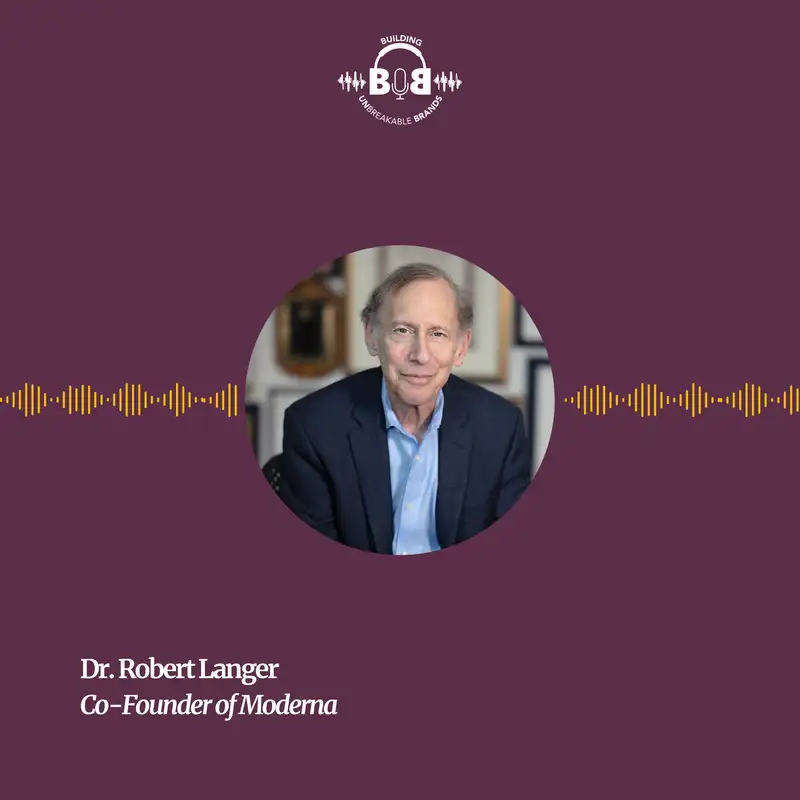
Choosing Work That Multiplies Impact with Dr. Robert Langer, co-founder of Moderna
Meghan Lynch (00:00):
Generational leaders measure their success with impact. So how do you build a career that creates ripple effects? In this episode, we talk with the co-founder of Moderna about what it means to choose life's work with lasting impact. He explains the importance of looking for problems with broad potential instead of incremental gains and how he thinks about what's truly worth years or even decades of effort. We also talk about another kind of legacy, teaching and mentoring the next generation of professionals. And of course, Henry joins us with his questions about dealing with failure and how to tell whether an idea is actually good. All this and more coming up on this episode of Building Unbreakable Brands.
(01:01):
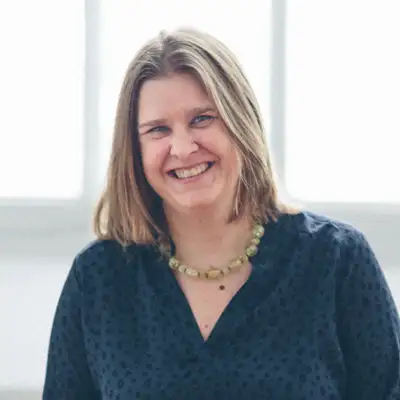
Welcome to Building Unbreakable Brands, the podcast where we talk to leaders with a generational mindset. I'm Megan Lynch. I'm an advisor to family businesses and CEO of Six Point Strategy, which helps generational brands honor their past while evolving for the future. My guest today is Dr. Robert Langer, who's one of the nine Institute professors at MIT, which is the university's highest honor. He's the co-founder of many companies, including Moderna and his patents have been licensed or sub-licensed to over 400 companies. He holds 44 honorary doctorates and has received over 200 awards, including the United States National Medals of Science and Technology and Innovation, one of three living individuals to have received both honors. Bob, it's so great to have you on the podcast. So appreciate you sharing your time and experience with us today. Oh,
Dr. Robert Langer (02:00):
It's my pleasure. Thank you for asking me.
Meghan Lynch (02:03):
So you've helped improve billions of lives. You've founded dozens of companies. You've mentored generations of scientists. For this conversation, I was hoping that we could kind of zoom in and really focus on how identity and intention can help us shape impact that lasts beyond ourselves. So I'm thinking about it kind of as a conversation about how you decided what was worth building. So early in your career, I know you turned down some more traditional, maybe more lucrative engineering paths because you really wanted to use engineering to help people. And I was wondering, looking back, when did that helping people peace become part of your identity?
Dr. Robert Langer (02:53):
I think it really started maybe when I was a fourth year student at Cornell when I was a senior. I was a teaching assistant. I really felt I was accomplishing something and helping people understand things better. And I love that. I love working with the students. So the next year when I was at MIT, I did some tutoring in Roxbury and Cambridge, and I really enjoyed that too. And then some people asked me to help start a alternative high school for low income kids. And I did the same thing, created some new curriculum. But I just really enjoyed the process of seeing that I could help young people and they were happier and I think maybe enjoyed school more and classes than they might've otherwise.
Meghan Lynch (03:42):
Was there a moment when you had to make a critical decision about the type of engineer you wanted to be or how you're going to use your engineering skills professionally?
Dr. Robert Langer (03:52):
Yeah, those are two different points, but the good question. So the type of engineer I had to decide that when I was at the end of my freshman year because you had to pick a type of engineering. And when I was a freshman, I didn't do very well in a lot of the courses, but I did do well and I liked chemistry very much. So I picked chemical engineering. I really didn't know what type of engineer I was going to be. I always like bio things interested me. But really when I got done with my doctorate even, which was many years after deciding to be a chemical engineer, I thought I'd work in an oil industry because that's just what everybody else did, but I didn't want to do that. So I started looking for ways that I might be able to help people, as you mentioned.
Meghan Lynch (04:32):
When you look back at your family or upbringing, was there any piece of that that you think was at play that kind of helped you connect with the students that you were helping or thinking about career options?
Dr. Robert Langer (04:46):
Well, I don't know. My mother was an extremely nice person. My father, he was very smart and he would try to foster my curiosity and education, but I don't know. It's always hard to know what those things are.
Meghan Lynch (05:04):
I know you've said before that you don't start with science. You really like to start with finding some kind of unmet need in the market or the world. It sounds like that's a lot of intention, right? That you have to be really intentional if that's how you're looking at the world and making decisions. I was curious if you have some kind of personal rule book or kind of guidelines that you use when you're trying to choose the types of problems that are worth years or decades of your life.
Dr. Robert Langer (05:39):
Yeah. Well, I'd say two things. One could be a problem, but I also do pretty basic research too, to create new technologies and maybe try to discover things. That being said, if I were to try to answer your question, I'd say perceived impact. And what does that mean? I mean, because it's a guess. You don't know when you do something what the impact will be. But by what I mean by perceived impact, a lot of the things that I think we've tried to do, certainly my feeling was if they worked, they wouldn't be incremental. In other words, incremental would be like an example, we created the first tiny particles that could deliver large molecules, and that's something that first people said was impossible. And secondly, that if you could do it, it seemed to me, well, there's a lot of different large molecules that it might be useful for.
(06:29):
And actually the ones I thought about at the time, like insulin haven't necessarily turned out to be true, though maybe someday, but others like certain types of hormones like vaccines, RNA, I mean, that's turned out to be very useful, but so perceived impact is something that you feel is broad. Incremental would be after I'd done some of these things and really understood how they worked, maybe I'd try to change the kinetics a little bit. So you get a feeling from ... And not that that would be unimportant, but it would be maybe more important to understand how the whole thing works so that you could do things like that.
Meghan Lynch (07:13):
So looking for things that are more like root that could have many potential uses or impacts versus looking at smaller, more targeted
Dr. Robert Langer (07:24):
Problems. I think that's good what you said. I think that's the general way I think about it, but it's a guess. You can't always-
Meghan Lynch (07:31):
Yeah. Are there other factors that go into when you're trying to decide where you're going to focus or spend time or how you look at problems?
Dr. Robert Langer (07:41):
I'd like to have some understanding. I'd like to feel that my skillset might be able to help.
Meghan Lynch (07:48):
How do you go about figuring that out? Especially because you have a pretty broad skillset. Are there specific kinds of problems that you are particularly attracted to or that you feel like you're well suited to solve? Well,
Dr. Robert Langer (08:02):
Things that involve chemistry and things that involve certain aspects of engineering. I mean, I'd contrast to that, I don't know that I'd be a very good politician as an expert.
Meghan Lynch (08:12):
How do you tell the difference between something that is an opportunity versus something that's maybe a distraction?
Dr. Robert Langer (08:24):
Yeah. Well, I think it goes to the same kinds of things that you're asking. I think an opportunity would be something I think would have a big impact. A distraction might be something that I don't think I'd make much progress on because I'm not that good at it or I couldn't marshal whatever it would take to be that good at it. And a distraction would be something that maybe didn't have a big impact.
Meghan Lynch (08:48):
You've also connected a lot of your technical work to commercialization and co-founding companies, making sure that there's sort of a business commercialization case for the science. How do you think about that? Is that an important piece of making sure that discoveries then have staying power and applications?
Dr. Robert Langer (09:14):
Well, it's important to me. I don't know that it's important to everybody. Some people do great science and hope that others will build on it and sometimes, and that they do. I guess I found that if I'm not my own champion, nobody else will be. And I want to see the things we do make a difference in the world. So that's why I've done the companies.
Meghan Lynch (09:34):
So it's really about making sure that it doesn't stay in the lab, but that it gets out into the world in the way that you think it can.
Dr. Robert Langer (09:41):
Trying to.
Meghan Lynch (09:42):
Yeah. I know your lab has also become a really important platform for other people's impact. And to me, this probably goes back to that moment that you were talking about at Cornell and you're realizing the impact that you can have on students and other people. But I'm curious why it's important for you to help other people build on your work and ideas or to champion their work and ideas.
Dr. Robert Langer (10:14):
Well, it's important to me that science advance, it's important to me that people get opportunities to do good things. And it's important to me that if we came up with things that have potential medical or nutritional treatments, that they get out to people so that they can someday use them.
Meghan Lynch (10:35):
Can you think back on any mentoring decisions that you made that might have that kind of outsized impact ripple effect?
Dr. Robert Langer (10:46):
Well, I mean, I think the people I've taught and the people who've gone through my lab, I mean, I think they teach thousands of others. I mean, I'd like to think that if you take biomedical engineering, I mean, I started doing that over 50 years ago and it was a much smaller area then. Now it's a much bigger one and part because of us and part certainly because of others as well, but I've trained a lot of people.
Meghan Lynch (11:14):
Yeah. Are there any things that you've had to intentionally not do so that other people could lead or step in or be able to contribute to projects of the field?
Dr. Robert Langer (11:32):
Well, I mean, I think people in the lab, certainly, the ones that work with me directly, they move things forward both in the lab and then when they graduate, and I keep in touch with a lot of them. And so I think things keep moving in terms of mentorship, kind of paying it forward in a way. I mean, not everybody, but I think people do that.
Meghan Lynch (11:59):
Yeah. Is there any qualities or things that you think make a particularly good mentor?
Dr. Robert Langer (12:07):
Being nice, urging people to not give up, being responsive. Judah Faulkman, who was my mentor, I'd say actually use what I'd call positive reinforcement and seeing the bright side of what happens. Sometimes people ask me, "Why do people work so hard in your laboratory?" And I always say, "I want them to work hard, not because I tell them to, but because they believe in what they're doing." And I try to get across that if they're successful, they will make a big impact on the world. And he did that with me.
Meghan Lynch (12:40):
I'm curious, as you look back, if there's any points where you felt like it was difficult, like the choice between following your instinct to help versus maybe what you were being pushed to do, either by other people or by the field or even just by money or opportunity. Have there been any points where the decision was a particularly difficult one to make, to choose between helping people and maybe other things?
Dr. Robert Langer (13:19):
Yeah. So I would say, I don't know, difficult is hard to say. I mean, I was more interested in ... Certainly I had different job things that I had to think about and they were always challenging for me. I mean, I didn't know what I wanted to do when I finished undergraduate. I really wasn't sure when I finished graduate work. I have gotten offers in the course of my professorial career, I guess I'd say. Jobs, people offered me to be presidents of different companies, but I don't know. I mean, I've always felt like follow your passion. So that meant more to me than money. It meant more to me than anything else. So I guess I kind of had that as my guide, that I wanted to do what made me feel good as a person.
Meghan Lynch (14:10):
And is that something that you encourage in the people who you work with in the lab? Is that same kind of like paying attention to where their passion is and what drives them?
Dr. Robert Langer (14:23):
It is. Yes, it is. In fact, it's funny, tomorrow and Sunday I have to fly to Michigan because I'm getting an honorary degree and I wrote some speech. They said, "I have to give some words to the undergraduates." And I was going to say just what you said.
Meghan Lynch (14:39):
You're listening to Building Unbreakable Brands, the podcast all about leadership with a generational mindset. Now my son, Henry, is going to join us as the voice of the next generation with a few questions for Dr. Langer.
Henry Lynch (14:52):
Hi, Dr. Langer. It's great to meet you. Thank you for all of your amazing work to make people healthier.
Dr. Robert Langer (14:59):
Well, thank you. It's a pleasure to meet you.
Henry Lynch (15:01):
Pleasure. Pleasure to meet you too. So when did something important didn't work after a lot of tries? What did you tell yourself to keep going?
Dr. Robert Langer (15:15):
Well, I told myself if I didn't keep trying, the things that I felt were important, coming up with certain molecules or other things that I felt might help treat disease someday might not happen. I also felt like I was working with other people and I didn't want to let them down.
Henry Lynch (15:35):
So how do you know if an idea is actually good or if you really just want it to be good?
Dr. Robert Langer (15:44):
Well, I mean, I always hope that they're good, but I think I kind of looked at it as, and it's a guess, it's an educated guess that it might have some impact someday. I use the phrase with your mom, perceived impact, which is meaning I'm guessing that it's going to do some real good someday.
Henry Lynch (16:04):
So if a kid wanted to invent something that helps people, what should they start with first?
Dr. Robert Langer (16:12):
Well, I personally think it's a long road if you're a kid, you have many years ahead of you. I really think the most important thing in a way is to get a really good education, to learn about math, to learn about science and things like that. So that would be, to me, the first thing that I would think is the most important, do well in school and things like that.
Henry Lynch (16:34):
Yeah, I think that's some good advice. So I also have a joke for you.
Dr. Robert Langer (16:40):
Okay. I like jokes.
Henry Lynch (16:43):
What kind of dog loves science?
Dr. Robert Langer (16:48):
I don't know. A
Henry Lynch (16:50):
Lab.
Dr. Robert Langer (16:51):
Oh, that's good. Very good. I like that.
Henry Lynch (16:54):
All right. Thanks, Dr. Langer.
Dr. Robert Langer (16:56):
Well, thank you. Yeah, go ahead.
Henry Lynch (16:58):
If people want to learn more about your story or your work at MIT, what's the best way for them to do that?
Dr. Robert Langer (17:06):
I think really there's a lot that's been written that I've written and that people have written about me. I'd probably just go to the internet. I've written some art or if they write me that people have ... I could send some articles and there's videos too. I've given speeches and some of them are on the internet too.
Henry Lynch (17:25):
Great. We'll be sure to put that in the show notes. Thanks so much for being on the show and also a bit of a special announcement. It happens to be my birthday tomorrow.
Dr. Robert Langer (17:37):
Well, so you'll be 10. Congratulations. Well, that's a good age. Well, I'm sure you've got to do very well. You ask good questions.
Henry Lynch (17:44):
Yeah, it's about a year being on the show.
Dr. Robert Langer (17:47):
Well, terrific. Well, happy birthday and I wish you the best in every way and your mom too. All
Henry Lynch (17:54):
Right.
Meghan Lynch (17:55):
Thank you so much, Bob. Really appreciate it.
Dr. Robert Langer (17:57):
My pleasure. Well, thank you and good luck and happy birthday.
Henry Lynch (18:01):
Thank you. Thank you.
Dr. Robert Langer (18:02):
All right, bye. Thank you. Bye-bye.
Meghan Lynch (18:06):
It's not lost on me that someone who has over 200 awards and 44 honorary doctorate degrees doesn't talk at all about those things. Instead, Bob talked to us about choosing work based on where he sees the possibility for real meaningful impact and the importance of mentorship as a way to magnify that. It's a great reminder for all of us who consider ourselves generational leaders. When you're making decisions about where and how to spend your time and attention, Bob's filter of working on the things that have the largest perceived impact could be a helpful way to keep focused. I also love the way he answered Henry's questions because the advice was so practical. Keep going when the work matters. Be honest that good ideas begin as educated guesses and start by building the foundation that will let you help others well. If this episode resonated with you, please share it with someone else who's thinking about the kind of contribution they want to make over the long term.
(19:16):
And if you're enjoying building Unbreakable Brands, leaving a review helps more people find the show. Thanks so much for listening, and we'll see you next time on Building Unbreakable Brands.